Saturday, October 22, 2016

An Opportunity to Expand my Curiosity of Mars


An example of the X-ray spectra you’d see from a supermassive black hole vs. the one our new MSc Student Charissa Campbell was researching in her undergraduate studies. (Gallo, 2011, JRASC, 105,143) While many of our students have previous research experience, this is not true for all. Still it has been an added plus for our newest recruit from St. Mary's University in Halifax, Nova Scotia. 

by Charissa Campbell


After 5 years, I successfully finished my Bachelor of Science degree but I could not tell if I wanted to continue with my studies or not. The final year of my degree was intense, filled with 6 classes a semester, working a part-time job as well as completing my undergraduate thesis which involved weekly research. All I could think of during that time was why on earth I had decided to do this field of work. However, at the same time, receiving my Bachelor degree in May 2016 was a great accomplishment and I appreciated the degree much more.

To be honest though, when the time came around to apply to graduate studies, I had no idea if I wanted to repeat the process I was currently going through. Sleepless nights, typical college food and one assignment after another. Since applications were due in early 2016, I figured, why not apply anyways and see what happens.

Since I did my undergraduate thesis on high-energy astrophysics, this was all I knew, research wise. So I applied across Canada for high-energy research, specifically on Active Galactic Nuclei. However, one day I got an email from Dr. John Moores asking if I’d be interested in planetary science. At first, I wasn’t sure what to think or if I’d even respond as I didn’t know anything about planetary science since it wasn’t in any of my studies at Saint Mary’s university. But then the voice inside my head said I’d be crazy if I didn’t take any opportunity that came my way, especially since I have been interested in Mars research from a young age.

An Experimental Life


Abdelkrim Toumi is a new postdoctoral fellow here in the Lab who started with us in September. Originally from Corsica, he completed his PhD studies at Aix-Marseille in France.

By Abdelkrim Toumi

As a new member of the “Planetary Volatiles Laboratory” group for my first postdoctoral fellowship, everything was new to me when I arrived a month ago. First, the environment… I left my family, friends and my home country (France) to live and work in Canada. The day of my arrival (so after a very, very long trip), I put my feet on the American continent for the first time of my life. It was really a shocker! Everything is bigger here than in France: buildings, streets and even the trucks. It is pretty much a new scale life for me because I come from a little town in Corsica. Luckily for me, the French culture is also present here: from indications in the subway to the food I buy in the supermarket. That made me more comfortable.

Thursday, September 29, 2016

The Final Planetary Science Short Course


Over the past few years members of the PVL have been attending the Planetary Science Short Course taught at Western University (full disclosure: I used to be an instructor in this course when I was a postdoc at Western). However, with the Western-based exploration CREATE cluing up, this past September may have been their final year. Luckily, our recent crop of graduate students was able to attend, including Elisabeth Smith, our new MSc who joined us this spring from Rensselaer PI in up-state New York.

by Elisabeth Smith


For seven days, four members of the lab – Giang, Jasmeer, Eric, and myself – were in London, Ontario for an intensive short course in Planetary Science at Western University. This was an important course for us to take, since we had varying degrees of exposure to planetary science, given our various backgrounds. My background is in Mechanical Engineering, and though I did take some undergraduate courses covering orbital dynamics and introductory astrophysics and astronomy, my knowledge in this particular area was lacking. Because I am now a research assistant in planetary science, I thought it would be a good idea to learn more about what I am researching.
The first day of classes covered the basics. We had two lectures - one in the morning and one in the afternoon. Here we were taught about the different classes of planets, stars, and natural satellites, and were introduced to several of the leading hypotheses on planetary and solar system formation. The afternoon lecture covered various planetary datasets – that is, sets of data obtained from various scientific instruments.
We also were divided into different groups during this lecture. These groups would be our teams for the course. During the span of the week, our teams would work together on a project to develop a plan for a sample return mission to Mars. The details of this project were given to us during the first day, and we immediately set to work to meet the outlined goals. 

Wednesday, September 28, 2016

An ode to conferences


Casey Moore, PVL's longest serving graduate student and a PhD Candidate stands in front of the poster he presented at the 2015 Division for Planetary Sciences Meeting in Washington, D.C.

By Casey Moore

Graduate students become masters at juggling. Between meetings with your advisor, meetings with course directors, health and safety training, taking courses, teaching courses, office hours, marking … ad nauseam -- every now and then you will find yourself finally able to sit down and get to your research and eventually, present at conferences.

Wednesday, September 14, 2016

Publishing an article and what happens next...


Christina Smith has just begun her 2nd year with us here at PVL as a Postdoctoral Fellow. She obtained her PhD at the University of Manchester. Her first paper for PVL created quite a stir, as can be seen from the press coverage above. How will her 2nd paper be received?

By Christina L. Smith

A major part of academia is the writing and (hopefully) subsequent publication of journal articles describing a research project. This can be quite a lengthy process. First, a draft article is produced by the authors - this itself will usually go through several iterations where the authors correct, clarify and comment upon the manuscript which describes not only the methods and results of a project, but also background information. The draft paper is then submitted to a journal and at this point the specifics differ journal to journal, but the general process is the same.

The Ring Paradox


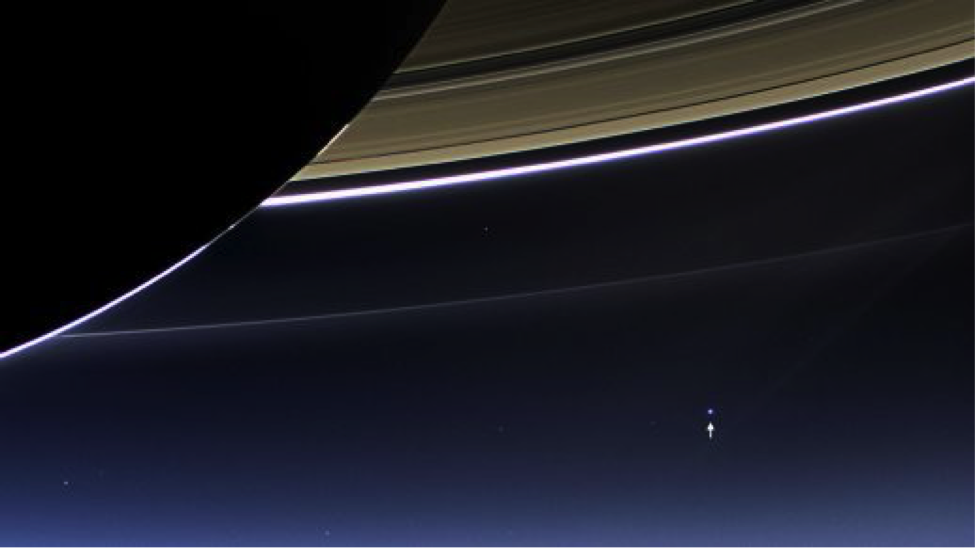
Eric Shear is a new MSc in the group this year, having previously obtained his bachelor's degree here at York. As our resident mission designor, he is exploring the Saturnian system in his MSc work. The image above is taken from the Cassini Mission.

By Eric Shear

There are still many things in our solar system that our spacecraft have not yet gotten close to, and Saturn’s ring system is one of them. It’s the biggest of all the gas giants’ ring systems and to date we do not know how old it is or how it formed in the first place, or how it got so large compared to the rings of the other gas giants. It appears to be an outlier – and a lovely outlier at that.

Wednesday, September 7, 2016

The Waiting Game

A topographic map of the lunar south pole, as obtained using the LOLA instrument onboard LRO and reproduced from the JMars software package. Jasmeer Sangha, an MSc Candidate here at PVL, has been looking at code which simulates the movement of water particles in this region since having joined us from the University of Toronto in May.

By Jasmeer Sangha

During my four years of undergraduate work it became more and more apparent to me that my future would revolve around using programs to simulate various astrophysical phenomena. As I gained more experience, I was able to write and run more complicated scripts. Though, as these scripts became more complex the run time would increase. My first experience with run time issues came in my final year: I had been assigned a project where I would analyze a three body system which would destabilize after 100,000 years. The one caveat being that the time steps had to be very small for any close encounters between the two planets but then had to dynamically change to large steps when the planets were far apart. This dynamic time step ensured that the code would not need excessive amounts of time to run, still the code admittedly took a few hours. It was then that I learned the importance of efficiently scheduling around my code run times in order to troubleshoot issues and achieve the most runs in the minimum amount of time.

As one could infer, this first year working in York’s Planetary Science group has given me the opportunity to work with bigger and even lengthier projects. The first project I was exposed to was written by Professor Moores. The program simulated a particle jumping around on the spinning surface of the moon until it escaped, vapourized or landed in a crater where it was too cold to escape. This process was repeated for five million particles, resulting in a code that took well over a week. Luckily, I have not needed to run this time-intensive code, yet.