Showing posts with label Summarizing Science. Show all posts

Friday, February 27, 2026

Talking to Mars

This week, PhD student Diana Hayes takes a look at how we communicate with spacecraft dispersed throughout the solar system. Given the number of assets at Mars, the situation on the red planet is particularly complex and therefore particularly interesting. Like any infrastructure, maintenance is critical to enabling future science if we expect to continue to count on the capable systems we have in place today.

by Diana Hayes

Here on Earth, we’ve built a sophisticated global telecommunications network that allows us to talk to people on the other side of the planet nearly instantaneously with very little difficulty, whether that be through the internet, texts, phone calls, or video chats. It’s easy to take this interconnectivity for granted. For example, if I have data that I want to share with a collaborator in Europe, can upload it to a Microsoft server from my computer, send them a OneDrive link, and they can download it to their computer; unless something goes wrong somewhere along the way, there’s very little thought from either of us about the intricate complexities of the systems that make this possible.

But what if your collaborator is on another planet?

This is a question that every interplanetary mission needs to answer. For many missions, the answer is simple: the Deep Space Network (DSN). The DSN consists of 14 radio telescopes spread across three sites in Spain (Madrid), the United States (Goldstone), and Australia (Canberra). This spacing ensures that at least one telescope has a direct line-of-sight to every location in the Solar System further than about 30,000 kilometres from Earth. The data rates seem laughable compared to what we can achieve on the ground, as they’re limited both by the size and power of the DSN telescopes and the antennas that can be put on a spacecraft, as well as the distance between Earth and a given spacecraft. For example, as I write this, one of the DSN telescopes is talking to Juno (orbiting Jupiter) at 50 kilobits per second, while another is talking to the Mars Reconnaissance Orbiter at 550 kilobits per second. For comparison, the wireless internet connection here at York typically averages around 100 megabits per second.

A screenshot of NASA’s DSN Now page, highlighting a communications session between one of the deep space antennas in Canberra and the Mars Odyssey orbiter.


For orbiters and flyby missions, the DSN is good enough. You can put a reasonably large, powerful antenna on your spacecraft and talk directly to Earth with minimal difficulty. For landed missions, the situation is more complex. When landing on another planet, minimizing the weight and size of your spacecraft is essential, so you can’t really just use a big antenna unless you’re willing to sacrifice science instruments for it. The solution we’ve come up with is relay communications. Rather than talking directly to Earth, a rover or lander first transmits its data to a spacecraft in orbit, which then uses its more powerful antenna to transmit that data to Earth. Because the lander-orbiter distance is much smaller than the lander-Earth distance, you can get away with much smaller antennas on the lander. 

Over time, this strategy has led to the development of the Mars Relay Network (MRN), which consists of a number of Mars orbiters that rovers and landers on the surface can use to talk to Earth. At the moment, there are four orbiters in the MRN: the Mars Reconnaissance Orbiter (MRO), the Trace Gas Orbiter (TGO), Mars Odyssey, and Mars Atmosphere and Volatile Evolution (MAVEN). Relay communications is not the primary mission of any of these orbiters, but they all were specifically outfitted with the instruments needed to serve as part of the MRN.

There is one obvious limitation to using this method to communicate with our landers and rovers on Mars: data can only be transmitted when an orbiter is above the horizon. During rover planning, this means that we need to keep track of when orbiters are available to receive data, and to prioritize which data we want to receive first since we can’t always downlink all of the data on the rover during a single comms pass. Fortunately, because we understand the movements and capabilities of our orbiters pretty well, this is really only a minor problem. 

Top: The elevation of the Mars Reconnaissance Orbiter as seen from Curiosity during the first week of 2025. Most of the time, the orbiter is below the horizon, passing over Gale about twice a day. Bottom: A close-up of the highest-elevation pass of MRO on January 4, 2025, highlighting how the orbiter is only above the horizon  for a very short period of time, about 15 minutes, which limits the amount of data that can be transmitted.


Less avoidable is the motion of the planets themselves. Every few years, Earth and Mars pass on opposite sides of the Sun, an event we call “solar conjunction.” When this happens, interference from the Sun can cause data corruption in the signals sent through the MRN. Corrupted data received from Mars isn’t the end of the world, since the data aren’t deleted from the rovers’ computers until they are verified to have been received intact on Earth, so any missing data can just be re-transmitted. Of more concern is data transmitted to Mars, which usually consists of rover commands. We really don’t want to send corrupted commands to our rovers, so during conjunction, we stand down from operations until the apparent angular separation between the planets is large enough for data to be transmitted reliably.

The apparent angle between Mars and the Sun, as viewed from Earth between the start of 2023 and the end of 2026. About once every two years, this angle is so small that the Sun blocks data transmission between the two planets, a period known as “solar conjunction.”


The MRN has become a critical piece of infrastructure in the exploration of Mars, but it’s facing an imminent crisis: it’s aging. Odyssey, the oldest part of the MRN, was launched in 2001, while the newest (TGO) was launched in 2016. The fragility of this age was highlighted in December of last year when the DSN lost contact with MAVEN. Although recovery efforts are ongoing, NASA has admitted that it’s unlikely that communication with MAVEN will be re-established. MAVEN had the highest data transmission capabilities of any of the four orbiters, so its likely loss leaves a gaping hole in the MRN. The other orbiters can at least partially fill that hole, but it’s obvious that something needs to be done before we lose another orbiter. Some proposals have been made, such as the Mars Telecommunications Orbiter (MTO), which was cancelled in 2005 before being revived in NASA’s 2025 budget. Dedicated telecom orbiters are much less sexy (scientifically speaking) than science orbiters, which makes justifying their cost to national legislatures much more difficult, despite their importance. 

By the way, this isn’t limited to just Mars. For example, the Huygens probe, which landed on Saturn’s largest moon Titan in 2005, relayed its data through the Cassini spacecraft. Notably, Dragonfly, NASA’s upcoming rotorcraft mission to Titan, will not be using a data relay, instead opting for direct-to-Earth communication. To make this possible with any kind of appreciable data volume while not using the much larger antennas found on spacecraft like Juno, Cassini, and Voyager, Dragonfly will be taking advantage of the large amount of energy provided by its nuclear power system (similar to the one used by Curiosity and Perseverance), which will allow it to transmit much stronger signals with a much smaller antenna.

If you’re curious about what the DSN and MRN are up to right now, check out NASA’s DSN Now (https://eyes.nasa.gov/apps/dsn-now/dsn.html) and MRN (https://eyes.nasa.gov/apps/mrn/) websites. 

Sunday, April 23, 2023

James Webb Space Telescope Update


The James Webb Space Telescope is able to view the universe in a truly new light. Below, MSc student Madeline Walters takes a look at some of the recent discoveries this new observatory has made. Image above: https://images.immediate.co.uk/production/volatile/sites/25/2022/01/JWST-galaxies-ba2f7b8.jpg

by Madeline Walters

It’s been a while since my last Webb update, but since then the space telescope has been busy! To kick off 2023, NASA released a statement [1] about how the James Webb Space Telescope (JWST) was used to capture the shadows of starlight cast by the thin rings of Chariklo, an ice small body located around 2 billion miles away from the orbit of Saturn. As the JWST observed Chariklo passing in front of a background star, the expected obstruction of that star's light occurred- a phenomenon called occultation- which allowed for the observation of a spectrum of the body’s surface. This showed evidence of crystalline water ice, which was previously only a guess from ground-based observations.
 
However, what surprised astronomers was that the starlight dipped twice rapidly before Chariklo passed in front of it, and then twice again as Chariklo moved away. These rapid dips in light were caused by the two thin rings of Chariklo - the first to ever be detected around such a small body. Since Chariklo is so small and far away, the JWST isn’t able to directly image the rings, but with occultation and the JWST’s heightened sensitivity, there is a hope that the composition of the rings may be isolated from the main body, allowing for further study.
 
Along with being able to get a closer look at smaller and more distant bodies with higher precision, the JWST has been showing us other things at higher resolutions than before. Take for example the side by side comparison of the ‘Pillars of Creation’ photos taken by NASA’s Hubble Space Telescope and JWST:

Image caption: A side by side comparison of the Pillars of Creation taken by the Hubble Space Telescope (left), and the JWST (right). Each image shows the same region taken in different wavelength ranges. The Hubble image is taken in the visible light range with different colors representing different molecules, while the JWST image is taken in the near-infrared range, allowing us to peer through the dust. (https://stsci-opo.org/STScI-01GF44F9Y10HZB8SPV2NZ8H6TZ.png)

On the left we have the Hubble image. This incredible and iconic image of towering cosmic dust in the heart of the Eagle Nebula shows us the primary components of what makes up these pillars [2]. Different gasses are represented by different colors here to allow us to visualize it better: blue is oxygen, red is sulfur, and green is both nitrogen and hydrogen. While the colors aren’t what we would see in real life, the structure is similar, since this is taken in the visible light wavelength range.

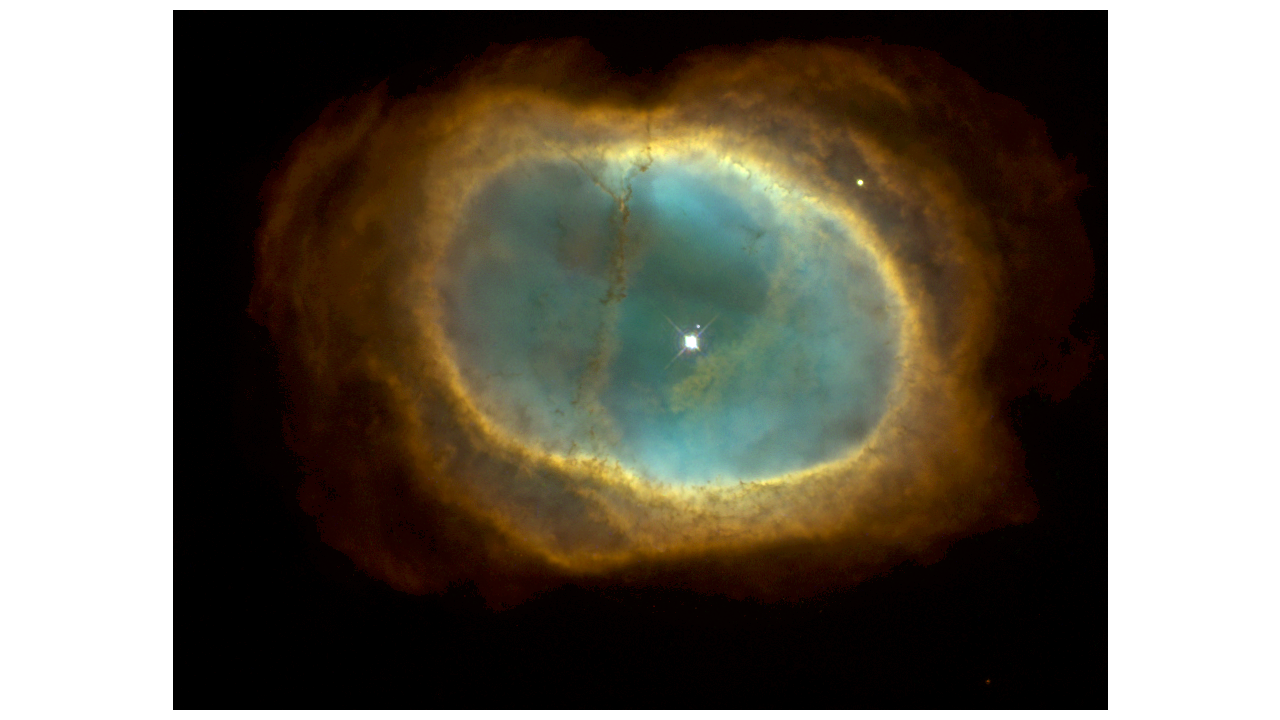
Now compare that to the image on the right of the same location taken by the JWST. Why is this different? It’s not just because the JWST has larger mirrors-it also comes down to the wavelength range between Hubble and JWST. Hubble observes in the ultraviolet, visible, and near-infrared ranges, while JWST observes in the near and mid-infrared range. This allows the JWST to pierce through obstructing dust and gas that shows up in the visible range, and show a view of the pillars we aren’t as familiar with, but isn’t any less stunning. More images reveal this difference between Hubble and JWST, such as these images of the Southern Ring Nebula, with Hubble on the left and JWST on the right:

Image caption: A comparison of the Southern Ring Nebula (NGC 3132) taken by Hubble (left) and the JWST (right)Each is taken in different wavelength ranges with different colors representing different gases, showing varying level of detail of the region. (https://stsci-opo.org/STScI-01EVVFSTZYZJJKAB41KA6AJ0HQ.png; https://www.nasa.gov/sites/default/files/styles/full_width_feature/public/thumbnails/image/main_image_stellar_death_s_ring_miri_nircam_sidebyside-5mb.jpg)

With the JWST, we can see in higher detail the rings of gas and dust thrown out by a dying star that we previously could not see in the Hubble image. Hubble has taught us some amazing things about the universe, but with the JWST, we can shed new light (in longer wavelengths) on objects in space previously unseen. Even just a few days ago, the JWST detected a dust storm raging on an exoplanet about 40 light years away [3]. The more we’re able to see, and the further back in time we are able to peer, the more we can learn about the universe and our place in it.

[1] https://blogs.nasa.gov/webb/2023/01/25/webb-spies-chariklo-ring-system-with-high-precision-technique/

[2] https://www.nasa.gov/image-feature/the-pillars-of-creation

[3] https://webbtelescope.org/contents/news-releases/2023/news-2023-105

Sunday, November 20, 2022

What’s going on with methane on Mars?

This week, Madeline discusses a critical component of her research into how methane is vertically distributed in the martian atmosphere. Read on for some details about the present state of the ongoing debate about Methane on Mars.
(Image source: https://mars.nasa.gov/system/feature_items/images/6037_msl_banner.jpg)

by Madeline Walters

On Earth, we’ve often heard of methane being produced as a result of living beings-microbes that help with livestock digestion. Though when we found methane on Mars, we were puzzled by its origins. Are there microbes helping the digestion of Martian cattle? Most signs point to no, however, we are still unsure of what may be producing the gas on Mars. Besides biogenic sources, methane can also be produced by geological processes, so being able to identify the sources of methane is a tricky yet interesting problem.

The issue with identifying the sources of methane is finding the methane in the first place. Since landing in Gale Crater in 2012, the Tunable Laser Spectrometer (TLS) instrument onboard NASA’s Curiosity rover detected background levels and a few higher spikes of methane from the surface, however, ESA’s ExoMars Trace Gas Orbiter (TGO) wasn’t able to detect any methane from higher up in the sunlit atmosphere. 

TLS lead scientist Chris Webster [1] comments: "When the Trace Gas Orbiter came on board in 2016, I was fully expecting the orbiter team to report that there's a small amount of methane everywhere on Mars, but when the European team announced that it saw no methane, I was definitely shocked.

The results were certainly unexpected after other detections of methane from other instruments, leading to new questions about whether the detections from TLS perhaps originated from the rover itself. Some scientists suggested the rover detected methane after crushing rocks, or perhaps wheel degradation, not willing to rule out any possibilities. However, the Planetary Fourier Spectrometer onboard the Mars Express (MEx) spacecraft observed higher levels of methane in 2013, after Curiosity also reported a methane spike, bringing back the question of how to make sense of these detections.

So why are some instruments reporting methane while others aren’t? This is something that is puzzling scientists almost as much as the source of the gas itself. Because of the conflicting reports of detection from different instruments, the key is observing how methane diffuses through the atmosphere at different times of day and through different seasons to see if perhaps the reports of methane from different instruments can still make sense.

Moores et al. [2] suggests a small amount of methane seeps out of the ground continuously such that during the day, it mixes well with the atmosphere, which results in very low levels of methane further up. Meanwhile at night, the methane can build up near the surface from the lack of convection. From this approach, we can make sense of both the ExoMars and Curiosity observations. While this could explain the discrepancies in methane detection from different instruments, we still have yet to determine the origin of the gas itself and if that origin perhaps can explain how the gas is being destroyed much quicker than it should. Because solar radiation and oxidation should be destroying the produced methane after a lengthy 300 years, the excess methane buildup should be detectable by TGO. This points to some destruction or sequestration mechanism that is getting rid of the methane quicker than expected such that the detected amounts make sense. 

"We need to determine whether there's a faster destruction mechanism than normal to fully reconcile the data sets from the rover and the orbiter," says Webster. 

One possible explanation for this is the gas’ reaction with the surface components. A chemical compound called perchlorate, which has been detected by Mars landers, may be acting as a sink for methane due to oxidation reactions [3]. When exposed to ultraviolet radiation from the sun, perchlorate accelerates the destruction of methane-from over 300 years to just days or hours. However, scientists are still exploring this possibility and as of right now, there’s still no way to be sure this is the reaction responsible for the gas’ quick destruction. While there are still many questions surrounding Martian methane, we are getting closer to explaining the mysteries of the gas.

___

References:

[1] https://www.jpl.nasa.gov/news/first-you-see-it-then-you-dont-scientists-closer-to-explaining-mars -methane-mystery
[2] Moores, J. E., King, P. L., Smith, C. L., Martinez, G. M., Newman, C. E., Guzewich, S. D., et al. (2019). The methane diurnal variation and microseepage flux at Gale crater, Mars as constrained by the ExoMars Trace Gas Orbiter and Curiosity observations. Geophysical Research Letters, 46, 9430– 9438. https://doi.org/10.1029/2019GL083800

[3] Zhang, Xu & Berkinsky, David & Markus, Charles & Chitturi, Sathya & Grieman, Fred & Okumura, Mitchio & Luo, Yangcheng & Yung, Yuk & Sander, Stanley. (2021). Reaction of Methane and UV-activated Perchlorate: Relevance to Heterogeneous Loss of Methane in the Atmosphere of Mars. Icarus. 376. 114832. http://dx.doi.org/10.1016/j.icarus.2021.114832.

Thursday, April 28, 2022

What Has the James Webb Space Telescope Been Up To?

PVL MSc student Madeline Walters has been following the launch and deployment of the James Webb Space Telescope with bated breath. This observatory will be a boon not only to the astronomical community, but also to the planetary science community. Above: the telescope's alignment evaluation image catches not only the target star, but myriad faint galaxies in the background.

by Madeline Walters

Since my last post about the James Webb Space Telescope (JWST), the telescope has reached its observing point and made some initial observations. The Webb is currently in orbit around L2, the second sun-Earth Lagrange point which is a gravitationally stable point about 1.5 million kilometers away from us. Since its launch, the spacecraft has gone through a few metamorphoses in preparation for its eventual observations. From testing a key antenna, to deploying its sunshield, each movement and maneuver has been integral to the telescope’s success. After successfully deploying the structure that binds the Webb’s two halves together, there was enough room to begin unfurling the massive sunshield that protects the telescope from harsh radiation. 

Soon after the sunshield was fully unfolded, the Webb deployed its two sunshield mid-booms, which stretched the sunshield out to its full length. This process requires the membranes to stretch to their proper tension, taking up to two days to tighten the sunshield. "As photons of sunlight hit the large sunshield surface, they will exert pressure on the sunshield, and if not properly balanced, this solar pressure would cause rotations of the observatory that must be accommodated by its reaction wheels," writes NASA public affairs specialist Alise Fisher in a blog post on December 30 after the launch. "The aft momentum flap will sail on the pressure of these photons, balancing the sunshield and keeping the observatory steady." It is a lot of very intricate and detailed steps that are necessary for every step of the operation-and for good reason. Every part of the unfolding must work in order to get the Webb to start observing. 

The next crucial part of the mission was the mirrors. On January 5, the telescope deployed its secondary mirror, unfolding a series of booms that hold the mirror out in front of the main mirror. This secondary mirror allows light to be collected and focused into a beam, which is then pushed down through the center of the telescope to a third mirror and other smaller ‘fine-steering’ mirrors which allow light to be properly allocated into the scientific instruments. 

Several days after the secondary mirror was deployed, the main mirror’s side panels were deployed, gearing up for the alignment of all 18 individual mirrors that make up the entire main mirror. And if you don’t think the word ‘mirror’ has been said enough so far - the observatory team spent about ten days working to move each mirror segment out of their preliminary launch alignments, and a lot longer for more precise alignment after that. However, for an instrument that will bring us observations for perhaps up to 20 years, a few months of alignment is worth it. 

Now at its destination for its science mission, the Webb has woken up, turned its instruments on, and has looked out into space to provide us with its first images. Its first telescope alignment evaluation image, made to only focus on the bright star in the center for alignment evaluation, shows background stars and galaxies due to the telescope’s optical sensitivity. Although there are still many months left before the JWST delivers its first full view of the cosmos, the telescope has already gone through an incredible journey made possible by an incredibly patient group of engineers and scientists.

Wednesday, April 13, 2022

How to tell time on Mars

This week, PhD Candidate Alex Innanen takes on a topic that has challenged planetary scientists and science fiction writers for decades: how do you tell time on a planet that has similarities in its revolutions to the Earth but some pesky differences? Often you'll hear of researchers working on Mars time because the length of its day is so similar to the Earth's. However, the match isn't perfect and can lead to unpleasant physiological effects for some and impractical, though hilarious, fixes. There is no 'Venus Time' or 'Jupiter Time' because their days are so different from ours that it makes no sense to try. But what to do with the extra 39 minutes in the martian day? Or the extra months needed in the martian year? 
(Image above from LMD's "Martian Seasons and Solar Longitude")

by Alex Innanen

One of my favourite things to read about are different calendars and methods of timekeeping. Here on Earth, there are all sorts of different calendars – the Gregorian, which you’re likely familiar with, the Julian calendar, and various lunar, solar or combination calendars. We also keep time within a single day in different ways – the standard now is a 24-hour clock, but at various times people have tried to introduce decimal time, where each day might have ten hours divided into 100 minutes. And this is just on our own planet, where generally the apparent movement of the sun and moon in the sky can give you a sense of when things are occurring.

Unsurprisingly, when you move to different planets things start to get more complicated.

Let’s take Mars for instance. Mars’ day (called a sol) is about 40 minutes longer than an earth day. If you want to use a 24 hour clock you either have to have a sneaky not-quite-an-hour-long 25th hour, or you have to make every hour a bit longer. Which is what the Mars clock that’s used for mission planning does. But wait, does that mean each hour has more than 60 minutes? Well, not really, if you make each minute a bit longer than an earth minute, and you can do that, not by adding extra seconds, but by making each ‘Mars second’ a bit longer than an Earth second. This way you can still use a familiar 24 hour clock.

This doesn’t mean that there’s some intrinsic ‘Martian second’ that is longer than an Earth second. While the second is an SI unit, it’s fairly arbitrary, as is splitting up a day into 24 hours. It’s just what we’re used to a second being.

One thing about round planets is that local noon – when the sun is directly overhead – happens at different times in different places. This is the reason that people on Earth invented time zones, so that local noon could line up – more or less – with noon on the clock. In reality, there’s a fair amount of variation even within a time zone. For example, there is about a 20 minute of difference between local noon in Toronto and Montreal just because of their difference in longitude, even though they use the same time zone.

There are no official time zones on Mars and missions tend to use local mean solar time (LMST), which is based on the average­ length of the sol, split into 24 hours. (There’s also local true solar time [LTST], which is referenced around the local noon, but drifts from 12:00 LMST throughout the year.) There is a generally accepted time standard for Mars, called Airy Mean Time (AMT) or Coordinated Mars Time (MTC) (comparable to Earth’s Greenwich Mean Time (GMT)/Coordinated Universal Time (UTC)) which refer to the mean solar time at Mars’ prime meridian, the crater Airy-1.

The other thing about Mars is its year is almost twice as long as an Earth year, about 668 sols or 687 Earth days. There is some familiarity, though, because Mars, like earth, has seasons! But Mars’ orbit is more eccentric than earth’s – that is to say, the path it travels around the sun is slightly more oblong. Earth also travels in an ellipse, and we do see the effects of not orbiting in a perfect circle on Earth seasons – the northern summer is about 94 days long, while the northern winter is only around 89 days – but not to so great an extent as on Mars. There the northern spring is 194 sols while the northern autumn is only 142 sols, a difference of 52 sols.

So what if we want to know what time of year it is? We can actually use the position of Mars (or any planet) in its orbit to tell this – specifically a parameter called solar longitude, shortened as Ls. We can start the year at a Ls of 0 degrees, the northern vernal equinox (the start of northern spring). Each subsequent season then starts at intervals of 90 degrees for a full 360 degree orbit. This convention is used in most scientific contexts because it can fairly easily tell you if events are occurring at around the same time year after year. It also avoids having to deal with things like leap years or leap seconds, because Mars’ orbit will always be 360 degrees – that’s just how geometry works.

All of this is what’s used currently to orient ourselves in time on Mars, but there have also been a number of attempts to create calendars and timekeeping systems that could be used by people living on Mars itself by everyone from scientists to fiction writers. The calendars divide the Martian year into months – which vary in their length, and in how many months there are in a year – and weeks – again, varying in length and quantity. Some calendars use familiar names for months and days of the week, and some make up new names, or new versions of the earth names. Getting into them all would probably take a whole series of blogposts, but it is a very fun rabbit hole to disappear down.

Wednesday, April 6, 2022

Lunar Cycles, Tides, and the Changing World

For those located near the coasts, it's impossible to miss the influence of planetary bodies (including the moon) upon the Earth. Twice a day, the sea level rises and falls. In some places, such as Canada's east coast Bay of Fundy, those changes can be quite dramatic. Here, liquid flowing on a spherical Earth, moving under a changing gravitational potential combines with the shallowness of the sea-floor to create a low-tide line kilometers from the high-tide line. As consistent as the system may seem, this "moon-driven [...] timeless circuit of invasion and retreat" may soon combine with longer-term effects of our changing climate, as PhD Candidate Giang Nguyen describes below.

By Giang Nguyen

Our lives are defined by astronomical cycles. How fast the Earth spins about its axis dictates our daily cycle. The angle between Earth’s spin axis with respect to its orbital plane tilts either the North Pole or South Pole towards the sun. How fast the tilt alternates between the North and the South directs our habits from season to season, year to year. These effects are the most apparent manifestations of astronomical forcing in our lives, but there are weaker forces at play that affect us in more subtle ways.
 
The Moon has its own cycles as well. The phases of the moon have often been used to keep track of time and many cultures use lunar calendars to this day. However, neither the Earth’s rotation nor the Moon’s orbit are in sync with the Earth’s orbit around the sun; we have to subtract and add days year to year to keep dates consistent with the seasons. The moon with its crescent shape is an important icon for many people across the world and indeed it does have its astronomical effect on us.
 
The moon’s gravity, along with the sun’s, exert tidal forces on Earth. These tidal forces shift water in our oceans from one place to another. You can imagine water sloshing back and forth in a bathtub and this is essentially what is happening in our ocean between the continental coasts. The movement of water will resemble standing waves where each node (point that experiences minimal amplitude change) is called an amphidromic point. Tidal forcing, along with the Coriolis effect, create huge hydrodynamical systems around these amphidromic points making them very important when trying to understand tides.
 
Seas that are somewhat enclosed by land such as the Gulf of Mexico and the Mediterranean Sea experience small tides. Regions that experience strong tides include northern Québec in Canada and France’s Bay of Biscay. These are the places where tides play a significant role in day to day lives, all resulting from how the moon orbits around Earth. Tidal effects are even strong enough to affect large climate systems [1].
 
The moon’s orbital plane around Earth does not line up with the Earth’s orbital plane around the sun. The wobble in the Moon’s orbit follows an 18.6 year cycle, called lunar standstills, and can translate to significant tidal effects. High-tide floods are already a reoccurring problem in many coastal regions. During periods in the cycle where tides are amplified, the risk of tide floods are predicted to be higher than ever. The next period of amplified tides is expected to arrive in the mid-2030s [2]. When this time comes, the Earth is predicted to be warmer and sea levels higher. Therefore, it is now more important than ever to continue to study the moon and tides and see how they affect the climate and weather around us.
 
Although our lives are mainly shaped around the sun, the moon still has its own special effects on Earth. The slight deviation in the moon’s declination as seen on Earth reveals a decade long oscillation that has significant implications on tidal forcing. This, in turn, may lead to climatic feedback that may redefine our everyday lives. Astronomical cycles remain a subject of great interest and I hope we get to learn more about it resultant from our relentless exploration of Space.

References:

[1] Lin, J., & Qian, T. (2019). Switch between el nino and la nina is caused by subsurface ocean waves likely driven by lunar tidal forcing. Scientific reports, 9(1), 1-10.

[2] Rasmussen, C. (2021). Study Projects a Surge in Coastal Flooding, Starting in 2030s. NASA JPL, https://www.nasa.gov/feature/jpl/study-projects-a-surge-in-coastal-flooding-starting-in-2030s

Tuesday, March 29, 2022

Exploring Active Planetary Defense & the DART Mission

One strong motivation for learning more about asteroids is to understand their potential for colliding with the earth. In this week's post, MSc student Ankita Das considers the Double-Asteroid Redirect Test, or DART, Mission. (Above: Asteroid Didymos and its moonlet Dimorphos taken by the Arecibo telescope is radar taken in 2003 Source: Arecibo Observatory/NASA)

by Ankita Das

With the launch of the Double Asteroid Redirection Test (DART) mission, the age of active planetary defense has formally begun. The DART mission is the first interplanetary spacecraft testing an asteroid redirection method to better prepare humankind for a potential mass extinction event due to the impact from a planetary body or asteroid fragment [1]. The spacecraft, launched in November 2021, is intended to crash into Dimorphos, a moonlet of asteroid Didymos, in September 2022, to see how much the speed and path of the moonlet can be altered.

Although this is the first dedicated spacecraft to be sent to an asteroid to study planetary defense techniques, ideas of such a mission have been around for decades.  In 1977, at NASA Ames Summer Study on Space Settlements, Dr. Brian O׳Leary, a former NASA astronaut candidate, proposed using mass drivers to move Earth-approaching Apollo and Amor asteroids to Earth’s vicinity during opportunities when the required velocity change to redirect them was low [2]. A critical development in this area occurred when a 2010 NASA study proposed the Asteroid Redirect Robotic Mission (ARRM) to use high-power solar electric propulsion technology to capture, and return an entire, very small (~10,000 kg), near Earth asteroid to the International Space Station [3]. In this article we reflect on how active planetary defense missions can safeguard us from a catastrophic impact events and if it is worthwhile to invest in a defense procedure.

The idea of protecting the planet from asteroid or cometary impacts emerged when researchers gained more knowledge about the small bodies of the solar system and investigated the impact history of the Earth. Upon investigation, scientists found multiple impacts from the Earth’s past, which have now been masked by erosion, geologic activities, and vegetation. The early discussions on planetary defense started once it was found that asteroid impacts most likely led to the mass extinction event that wiped out the dinosaurs. In the meantime, we also gained more knowledge about the small bodies of the solar system, informing scientists about the likelihood and frequency of potentially catastrophic impacts on the Earth. These studies also helped identify how past events from the Earth’s history could be linked to impacts from outer bodies [4].

For example, the infamous Tunguska event of 1908 involved an explosion equivalent 12 megatons of TNT, attributed to a meteor air burst, where a stony meteoroid of more than 50 m in diameter entered the Earth’s atmosphere at a speed of about 27 km/s and disintegrated near the Tunguska river in a sparsely populated region of Siberia in Russia. It was estimated that about 80 million trees over an area of 2150 sq. km. perished due to the impact [5]. More recently, an event that occurred in the city of Chelyabinsk, Russia in 2013 drew attention from the scientific community where a small asteroid - about the size of a six-story building - broke up over the city of Chelyabinsk. The asteroid, about 17 m in diameter and weighing approximately 10,000 metric tons, hit the Earth’s atmosphere at about 18 km/s. The energy of the resulting explosion exceeded 470 kilotons of TNT. The blast was so strong that it triggered detections from monitoring stations as far away as Antarctica [6].

Assessing Potential Threats

The Earth Impact Database [7], maintained by the University of New Brunswick, currently identifies as many as 190 confirmed impact structures on Earth’s surface. They range from small (tens to hundreds of meters in diameter) impact craters to large ones like Vredefort in South Africa measuring 160 km in diameter, dating back to 2023 million years. It is also true that not all impacts from outer bodies would result in terrestrial craters (i.e., they could explode in the atmosphere causing only air burst like the one at Tunguska), not all impact structures on the Earth’s surface have been identified [8]. Therefore, we may consider that these events are common and frequent on geologic timescales and the fact that our awareness of the population of potential impactors in the Solar System has been improving, how much of a threat do asteroids and comets really pose? 

Imagine the possibility of an asteroid with a diameter of more than 300 m heading towards a critical infrastructure like a nuclear plant. While the probabilities of such an event may be extremely low, it is essential that we develop our understanding of the risk associated with the entry of planetary bodies, considering the potential damage even a smaller asteroid (with diameter of less than 300 m) may cause to our civilization. Potentially hazardous asteroids and comets are categorized by NASA [9] and researchers [10]. The threat and potential of an impact primarily depend on the size and composition of the object, the surface being impacted, and the angle of impact. As of today, more than 28 000 near-Earth asteroids (NEAs) have been identified with majority of them having diameters in the range 30 – 100 m [11]. Smaller objects burn up in the atmosphere harmlessly as they approached the Earth. Larger objects, even if they burn up before hitting the ground, cause air burst or explosion, leading to severe damage.

To assess the potential damage and probability of impact, first, we need to detect these objects, and then we need to monitor their orbits. This is done from ground-based and space telescopes. By applying Newton’s laws and N-body simulations (i.e., modeling equations of motions for N objects interacting gravitationally), the orbits of most of these objects are predictable for at least 100 years into the future. Only the asteroids whose orbits cross that of the Earth are potentially dangerous. However, as mentioned earlier, not all asteroids are of the same size, and the larger the object, the higher is the threat. At the same time larger objects are rarer. Events like the Tunguska and Chelyabinsk were caused by smaller bodies compared to the events that caused the mass extinction approximately 66 million years ago due to an impact from as asteroid of diameter of about 10 km [12].

Thus, although the Solar System is populated with small bodies like asteroids and comets, only a fraction of these objects are of sizes that can be damaging and can potentially go on a trajectory that will coincide with the Earth to cause an impact. Asteroids that follow orbital trajectories within Earth's "neighborhood" (i.e., within 7.5 million km of Earth's orbit) around the Sun and that are more than 140 m in diameter are potential hazard to Earth and identified as Potential Hazardous Asteroids (PHAs) [13]. Ongoing research has enabled us to come up with a special classification of asteroids and objects which are closer to Earth’s orbit [14]. Not all near-Earth objects (NEOs) will impact the Earth at some point, but it is more likely that if an impact does happen, it will be an NEO.

Our Options for Defense

So, what are our options for defense as a species if an asteroid were to head our way? There are a few popular ideas. The first one is sending a spacecraft to the asteroid that can fragment the asteroid into smaller pieces. This idea sounds great but is not practical since the smaller fragments can also cause harm to the planet. Think of it as breaking down a big problem into 100 tiny chunks and having to deal with these 100 tiny chunks of the same problem. An alternate and favored line of action currently being investigated by the scientific community is deflecting the asteroid into a new orbit so that it misses the Earth completely. This can be achieved in a few ways. One would be to crash a spacecraft into the asteroid itself to gently nudge the asteroid into a newer orbit. This is what the DART mission is set to test on the asteroid Dimorphos, a small (160 m diameter) asteroid  in orbit around a larger orbit of the asteroid Didymos (780 m diameter). DART’s LICIACube spacecraft will crash on Dimorphos to create a kinetic impact that will change the orbit of Dimorphos around Didymos.

Image: Schematic of LICIACube attempting to change the orbit of Dimorphos
Image Source: Johns Hopkins Applied Physics Laboratory /NASA

Although Didymos is not a threat to Earth, this will be a demonstration of how effective the kinetic impactor method is when it comes to changing the course of an asteroid, called redirection.

Another idea involves the gravity tractor method that exploits the gravitational attraction of a spacecraft with the asteroid to cause continuous minuscule changes in the orbit, which would, cumulatively, over time result in a more visible change of the trajectory of the asteroid. The only downside to this method is it is a long process that involve several years [15], and hence we will need to know about the asteroid well in advance from the date of potential impact. This brings us to the question, what happens if we discover an asteroid heading our way and we do not have sufficient time to send a spacecraft to the asteroid to deflect it? Such a scenario will call for a damage control strategy where the trajectory of the asteroid is monitored, the potential places on the Earth where the asteroid is expected to impact is calculated, and measures are taken to minimize the damage that could be caused to life or infrastructure.

To conclude, planetary defense is an exciting field of study which is necessary for the safekeeping of the planet. In 2016 NASA established the Planetary Defense Coordination Office (PDCO) to manage its ongoing mission of planetary defense. NEOs and NEAs need to be monitored constantly, in addition to the continued identification and discovery of additional potential impactors capable of significant damage so that we can prepare for a potentially catastrophic impact event. The DART mission is a critical mission that will be our first step in equipping ourselves better in the event of a hazardous asteroid coming Earth’s way.

___

Sources:

[1]  https://www.nasa.gov/specials/pdco/index.html 
[2] Mazanek, D. D., Merrill, R. G., Brophy, J. R., & Mueller, R. P. (2015). Asteroid redirect mission concept: a bold approach for utilizing space resources. Acta Astronautica, 117, 163-171.
[3] https://authors.library.caltech.edu/86061/1/Asteroid_Redirect_Robotic_Mission.pdf
[4]  Sleep, N. H., Zahnle, K. J., Kasting, J. F., & Morowitz, H. J. (1989). Annihilation of ecosystems by large asteroid impacts on the early Earth. Nature, 342(6246), 139-142.
[5] https://www.sciencedirect.com/science/article/abs/pii/S0019103518305104?via%3Dihub
[6]  https://www.space.com/33623-chelyabinsk-meteor-wake-up-call-for-earth.html
[7]  http://www.passc.net/EarthImpactDatabase/New%20website_05-2018/World.html
[8]  https://www.boulder.swri.edu/~cchapman/crcepsl.pdf
[9]  https://cneos.jpl.nasa.gov/about/neo_groups.html
[10]  http://www.boundarycondition.com/NEOwp_Chapman-Durda-Gold.pdf
[11]  https://cneos.jpl.nasa.gov/stats/size.html
[12]  https://agupubs.onlinelibrary.wiley.com/doi/pdf/10.1029/97JE01743
[13]  https://solarstory.net/asteroids/near-earth-asteroids
[14]  https://space.nss.org/national-space-society-planetary-defense-library/
[15]  https://iaaspace.org/wp-content/uploads/iaa/Scientific%20Activity/conf/pdc2015/IAA-PDC-15-04-11.pdf 

Monday, February 28, 2022

Penitentes: What’s Hidden In The Ice?

This week, one of our first year MSc students, Madeline Walters, considers the recent discovery that penitentes (pictured above) extend the altitude range of habitable environments for terrestrial bacteria. What implications could this have for other planetary environments within our solar system on the cusp of habitability?
[ Image Credit: dreamX ]

By Madeline Walters

One way to look for life beyond Earth is to see in which extreme conditions life already exists. Spread over the high altitude, extremely cold and arid wilderness of the Atacama Desert in Chile, are strange ice formations which may be important for future investigations of life beyond our planet. A study led by researchers from the University of Colorado Boulder found that these spire-like formations, called penitentes, act as a home to microbial life forms. This discovery is important for astrobiological research and implies that life may be able to form elsewhere in the solar system in similar extreme conditions.

Snow algae is commonly found in icy areas in the cryosphere, however, not so commonly at extreme elevations in hyper-arid environments. The harshness of these environments show life can form in extreme temperatures and altitudes, environments which are similar to areas on other planets in the solar system. Structures similar to penitentes found on Earth have been identified on Pluto, and perhaps on Jupiter’s moon Europa (currently a heavy debate), which points out the possibility they could exist elsewhere in the Solar System as well. In order to see if we can find similar formations on planets such as Mars, where similar extreme conditions exist, we have to understand how penitentes form.

Incoming solar radiation hits areas of lower density snow, which causes melting and sublimation-the process in which a solid directly transitions to a gas without passing through a liquid state. Once the sublimating areas begin to form, these bowl-shaped depressions which are made of very reflective ices concentrate the incoming light at the center of the depression, self-illuminating and deepening the depressions. It is within these formations that life can be found hiding from the sun.

In March 2016, Steve Schmidt, a microbial ecologist at the University of Colorado Boulder, and his team discovered red smudges on meter-tall penitentes at an elevation of around 5,300 meters. After analyzing DNA sequences of these red smudges, it turned out the samples matched that of snow algae Chlamydomonas nivalis, which was previously found living in extreme conditions on Mount Kilimanjaro, the Swiss Alps, and Antarctica.

This algae was found to be red due to the color acting as a protective barrier for the organisms-it helps to reflect some of the incoming radiation, which is re-emitted and warms the surrounding area around the algae creating liquid water. The discovery of this life living in such an extreme environment poses an important question- does this mean life can form in similar conditions off-planet? Knowing the limits and extremities in which this kind of life can exist is important for answering that question. How much radiation can this algae withstand, and to which altitude and temperatures can they survive? Although penitentes have not been conclusively found on Mars, we can model their formation on the planet using what we know about how and where they form, as well as our knowledge of Mars’ atmosphere and climate and its dust and ice interactions to perhaps one day conclusively find these structures, and perhaps more, beyond Earth.

To learn more:


UC Boulder study article:
https://eos.org/articles/microbes-spotted-on-blades-of-ice-high-in-the-andes 

Europa Debate:

Reply to: Penitente formation is unlikely on Europa | Nature Geoscience

Tuesday, September 14, 2021

It's meteor shower season once again - but what actually are they?

Anyone who has spent time lying back and casually looking up at the sky has likely seen the fiery trail of a meteor which streak across the sky every few minutes on a typical night. During meteor showers, the rate can increase dramatically and all of the meteors appear to originate near a point called the radiant. This week Justin Kerr discusses the source of these fascinating features of the night sky.
(Image source: NASA/Bill Dunford)

by Justin Kerr

With another year of the Perseid meteor shower drawing to a close next week, many of us have been lucky enough to see quite the show while outside of the city. For those who haven’t, you still have until approximately August 24th to catch a glimpse of it – and if you can’t get a good view by then, there will be more opportunities to see a major meteor shower later in the fall. But what actually are these meteor showers, and why is it that each one appears at the same time each year like clockwork?

Meteor showers are events in which a large quantity of meteors are visible in the sky and all appear to be originating from a single point in the sky. This apparent singular origin is how each of the recurring showers derives it’s name, with the shower taking on a name based upon the constellation which contains that apparent origin of the meteors. The meteors themselves are caused when small pieces of rock (meteoroids) enter the Earth’s atmosphere while traveling at tens of thousands of km/h (tens of km/s) relative to the Earth and begin to burn up. Since the rocks involved in meteor showers are typically only around the size of sand grains, they completely burn up in the atmosphere and never impact the Earth as a meteorite. Even though they are so small, we can still see such bright light as they burn up thanks to the intense heating by friction with the air resulting from their high velocities. Some meteors even leave trails of ionized gases in their wake, giving us a glowing trail to see for a few seconds after the meteor has burned up. The reason they all originate from the same apparent location along with why they occur on a yearly schedule is linked to the origin of these small space rocks.

These large groups of meteoroids striking the Earth are not just bits of rock leftover from the birth of the solar system or visitors from the asteroid belt. They stay in very specific orbits, which gives astronomers a clear clue to their origin. The meteors we see during meteor showers are in fact the remains of comets, which fill their orbit with debris as the ice holding them together melts away each time they pass the sun until eventually they are all that is left. Due to conservation of momentum, the small rocks contained in the comets stay in the same orbit as the comet once breaking free. At this point, we then have an orbit filled with meteoroids ready for Earth to strike instead of one large comet.

The yearly recurrence of meteor showers is simply due to the astronomical definition of the year itself – the (approximate) time it takes for the Earth to complete a full revolution around the Sun. The orbit of the Earth crosses the orbit of each dead or dying comet only at one point. Every time the Earth reaches that point in the orbit each year, it swings through the cloud of meteoroids and gives us a beautiful show in the night sky. Each of the different meteor showers we are familiar with come from the remains of a different comet, and so occur at a different time of the year when the Earth reaches that intersection location in it’s orbit around the Sun. The currently occurring Perseid meteor shower comes from the comet Swift-Tuttle, while the upcoming Orionids are leftovers from the famous Halley’s Comet. There are two meteor showers which are thought to be caused by the remains of asteroids instead of comets, most notably the Geminids originating from 3200 Phaethon, but all others we know of are the result of comets.

While many of us may fear the impact of a whole comet or asteroid, the tiny pieces of them hitting us during meteor showers are an entirely different story. To see for yourself, keep an eye on the sky during the night up until August 24th to catch the Perseids. The best time for viewing meteor showers is typically just before dawn, but any time after dark when the constellation the shower is named after is visible will do. While you will have a much better chance of seeing a meteor if you are outside of the city, it is even possible to catch some here in Toronto – I have even been lucky enough to spot a few while taking my dog for a walk in the cooler weather after dark! For a much better show, you can check out various areas outside of the city with a much darker sky – for areas relatively near Toronto, I can suggest the Torrance Barrens Dark Sky Preserve or a camping trip to Long Point Provincial Park (pandemic restrictions permitting). While the Perseids are nearly finished for the year, some of the other best opportunities for viewing a meteor shower this year are yet to come with the Orionids peaking on the night of October 21st, the Leonids on Novermber 16th, and the Geminids on December 13th. Make sure to keep your eyes on the sky this fall and catch a glimpse of the fiery end of some tiny pieces of comet! 

Monday, July 5, 2021

Where are all the microbes?


This week, our Research Associate, Dr. Haley Sapers, introduces us to the enormous hidden world of microbes all around us. Studying these organisms, the niches they inhabit, and the strategies they use to survive provide clues to the adaptability of life writ large. That, in turn, helps us to understand what kinds of planetary environments might be clement to some form of life. Above, microbes from 2.8 km below the surface of our world. (image credit: Luc Riolon, https://commons.wikimedia.org/wiki/File:Candidatus_Desulforudis_audaxviator.jpg CC-BY-SA-2.5)

by Dr. Haley Sapers

If I asked you where most of the life on Earth was, you would probably tell me it’s all around us. On the surface in forests and jungles, in the oceans around coral reefs and out there swimming around as whales and sharks. And you wouldn’t be wrong.

Macroflora and fauna – that is the large plants and animals that we can see with the unaided eye – have a lot of mass. Plants alone are massive. The cumulative weight of plant life on Earth accounts for a whopping 450 Gt (450 billion tons) of carbon. To put that in perspective, all of the cars in the world only weigh in at about 2.5 billion tons. And because of their large mass, plants and animals comprise most of the biomass on Earth. But mass isn’t the whole story –  the total number of all living organisms that we can see pales in comparison to the extraordinarily high numbers of microbes that inhabit the Earth.

A Phylogenetic Tree of all life on Earth showing relationships between large groups of organisms. Bacteria are in Blue, Archaea in Green and Eucaryotes appear in red.
(image by TimVickers https://commons.wikimedia.org/wiki/File:Collapsed_tree_labels_simplified.png)

There are 3 domains of life; the domain we, and all plants, animals, fungi, and insects are part of is called Eukarya. Prokaryotes, or “Microbes”, as they are colloquially known, form the Bacterial and Archaeal domains. Although bacteria and archaea are both microscopic, they are as different from each other as E. coli is from us! There are about 1030 individual bacterial and archaeal cells on Earth (that’s 1 nonillion or 1 thousand billion billion billion!) To throw a few more astonishingly large numbers out there, there are only an estimated 10 to the power of 24 or 1 quadrillion stars in the Universe or a measly 10 to the power of 21 (one thousand trillion) grains of sand on all the beaches and deserts of the Earth. All those thousand billion billion billion cells weigh in at approximately 77 Gt of carbon. The ~10 to the power of 10 (10 billion) people on Earth only comprise 0.06 Gt of carbon or less than 0.1% of the weight of the microbes.

So, where are all those microbial cells?

You might be surprised to learn that you’re only half human. Of all the cells that are part of your body, about half of them are microbial. They live in our mouths, stomachs, intestines, and skin (among other places…).  Don’t be alarmed – we need all these microbes – in fact, we wouldn’t be able to get any nutrients from our food without them. But if each of the 10 billion people on Earth are home to 10 to the power of 14 microbial cells – we still only end up with 10 to the power of 24 microbes, 6 entire orders of magnitude short! In 2018, a group of scientists decided to count up all the life on Earth and figure out where most of it is. There’s a great (free) publicly available book that looks at a bunch of biological statistics authored by the same group (http://book.bionumbers.org/). 

But back to where the microbes are.  

All that macroflora and fauna that we see around us every day (us included) is in some way dependent on the sun for energy. Life on the surface of the Earth is fueled by the sun, and all life needs energy. So where else could life be? It turns out almost all of those bacterial and archaeal cells (over 95% of them) are actually living deep in the Earth’s subsurface, far, far away from the energy of sun. How is that even possible? That’s actually a really good question, and one many scientists are still trying to figure out. 

There are many different metabolic strategies, or ways for life to get energy. Getting energy from the sun, or consuming other organic matter are only two – perhaps the most common to us, but by far not the most common considering the vast diversity of life on Earth. There are bacteria, for example, that ‘breathe’ iron the same way that we breath oxygen. The iron provides a different electron dumping ground instead of oxygen in anaerobic (or oxygen-free) environments. Many of the microbial subsurface dwellers use strategies like this, gaining energy directly from rocks in a metabolic process known as chemoautolithotrophy (chemo = chemical, auto = self, litho = rock or the self production of chemical energy from rocks). They’re literally living geo-electrical circuits! 

In fact, these seemingly strange metabolisms may have been the first to evolve on Earth (much before photosynthesis, or the ability to harvest energy from sunlight). The very first life on Earth may have been similar to the microbes that now live deep in the Earth’s surface. Because of the diverse energy harvesting strategies that subsurface microbes use and the evidence to suggest that these are some of the earliest metabolisms to have evolved, it’s possible that the subsurface of other planets such as Mars are also habitable in the same way. Who knows – maybe there are even microorganisms living off rocks in the deep subsurface of Mars today!

Sunday, April 11, 2021

What is the geocorona, and how can modelling it help us find habitable exoplanets?


As a planet passes in front of a star, the size of the shadow it casts is different at different wavelengths. Typically the solid surface of the planet blocks all light. Above that, the wavelength variation of the absorption in the thin sliver of atmosphere seen against the star is used to help us understand the environment of that planet. But if you go to lyman-alpha (121.6 nm) wavelengths, the greatest absorber is hydrogen escaping from the top of the atmosphere. This sparse hydrogen region, called the geocorona, can be many times larger than the radius of the solid surface, blocking a much larger fraction of the star's light. The image above shows Earth's geocorona as seen from the moon, taken by Apollo 16 astronauts in 1972. https://www.esa.int/Science_Exploration/Space_Science/Earth_s_atmosphere_stretches_out_to_the_Moon_and_beyond

by Justin Kerr

For today’s PVL blog post, I am going to be giving you a brief introduction to my main research project with the team and eventual Master’s thesis. My research is focused on developing a better understanding of the hydrogen coronae that we expect to surround exoplanets in order to direct future searches for life with UV telescopes. 

But just what is a hydrogen corona? 

It may surprise you to hear that a small portion of the Earth's atmosphere extends past the orbit of the moon – this very outermost portion of Earth’s atmosphere consists of atomic hydrogen (so not the gas H2 that we are familiar with on the surface) which has yet to fully escape the gravity of the planet and is known as the geocorona. The geocorona is the hydrogen portion of the exosphere, which itself is defined as the region of the atmosphere where densities of atmospheric particles are so low that they can be described as collision-less. At the orbit of the moon, recent studies have shown that the density is so low that you would only find about one single atom of hydrogen per cubic meter. The geocorona extends past the moon to a radius of at least 100 times that of the Earth before eventually merging with empty space as the influence of the solar wind makes it impossible for the Earth to keep its grip on the atoms.
    
Now that we know what the geocorona is, how can we actually detect it? A single atom per cubic meter of empty space isn’t exactly something you could count visually or easily collect for sampling, after all. Luckily for us, hydrogen happens to be an exceptionally well studied element and we can borrow one of the most famous ways astronomers detect it throughout our galaxy. From quantum mechanics we know that the electrons in atoms can only occupy specific energy levels, and when they move between these levels they will either release or absorb light of a specific wavelength related to the energy difference between the two levels. 

For hydrogen, we know that when an electron moves between the first and second energy levels it will absorb or release light with a wavelength of 121.6nm. This specific line of light in the spectrum is known as the Lyman-alpha line. Since this wavelength falls within the ultraviolet (UV) portion of the electromagnetic spectrum of light, we can then detect it with UV telescopes. In the case of the geocorona, we can see this Lyman-alpha light around the Earth when 121.6nm light from the sun is absorbed by the geocoronal hydrogen and re-emitted in different directions. It is this light that the picture taken by the Apollo 16 astronauts shown above is seeing. This works slightly differently for exoplanets since the Lyman-alpha light produced by the planet’s hydrogen corona won’t make it all the way to Earth. Instead of looking for emissions from them, we look for drops in the Lyman-alpha light that should normally be produced by the star as some of it will have been absorbed by the corona and re-emitted in random directions.

So, we can see a hydrogen corona floating around an exoplanet. How does this relate to finding habitable worlds? It comes down to how a hydrogen corona is actually produced around a planet. From studying the geocorona, we know that it’s size is directly linked to the amount of water vapour located at the base of the exosphere. This is because the atomic hydrogen making up the geocorona is produced by the photo-dissociation (breaking apart of the molecule by light) of water. The size of the hydrogen corona around an exoplanet with an Earth-like atmosphere should also be linked to the amount of water vapour in the same location. While we can currently detect the hydrogen corona of gas giants with hydrogen-dominated atmospheres using the Hubble space telescope, we will need to wait for more powerful instruments such as the proposed LUVOIR telescope to see them around potentially habitable exoplanets.

The goal of my research is to use computer models of exoplanet atmospheres to understand how the size of the hydrogen corona changes with different atmospheric characteristics below the exobase. While telescopes such as LUVOIR which could be used to confirm our models are still a long way from launching, this work will help develop analysis plans and proposals for research so that we are ready when the necessary data becomes available for study. Even though it is just one potential piece of the massive effort put into the attempt to find alien life, I hope that my efforts here with PVL will one day play a role in this grand undertaking to better understand our place in the universe.

Tuesday, April 6, 2021

The Missing Shorelines of Mars

This week, PVL MSc Conor Hayes considers the Martian Ocean hypothesis. This theory has several strong lines of evidence in its favour. However, some of the expected geological remnants, such as a clear shoreline lying along a geopotential, are lacking. Above: features described by some authors as putative "mega-tsunami" backwash channels on Mars, perhaps caused by a meteor impacting a putative ancient Martian ocean. (NASA/JPL/University of Arizona)

by Conor Hayes

Although it is pretty clear that liquid water once existed on the surface of Mars, there is still ongoing debate over how much water was present, as well as how long it lasted. One of the more exciting theories is the “Mars ocean hypothesis,” which posits that the planet’s northern hemisphere hosted a large ocean that covered about a third of its surface. If you look at a terrain map of Mars, this theory intuitively makes sense. Much of the northern hemisphere is a large basin, about five kilometers below the average terrain elevation (sometimes called the datum) and comparatively lacking in features like impact craters. The distribution of former stream channels and river deltas also appears to be consistent with the idea of these primordial rivers flowing into an ocean. The presence of such a large body of water would have significant implications for the potential habitability of Mars in the past, particularly given the thicker atmosphere and higher temperatures needed to sustain that volume of liquid water for an extended period of time.

One problem facing this theory is the lack of an obvious shoreline. Although several potential shorelines have been identified, none have been particularly convincing. In addition to having alternate geological explanations, these proposed shorelines show substantial changes in elevation along their lengths, on the order of several kilometers. Because water likes to lie flat along gravitational potentials, this would suggest either that some kind of geological rearrangement occurred between the formation of the shorelines and the present day or, more likely, that these features aren’t shorelines at all.

In addition to providing clear direct evidence for a Martian ocean, finding shorelines would also help us constrain the properties of Mars’ early atmosphere. Here on Earth, shorelines are largely cut by wind-driven waves, in addition to other phenomena like tides. If ancient shorelines do exist on Mars, then that necessarily implies that the atmosphere was once dense enough to allow the wind to form significant waves. Conversely, the lack of shorelines does not necessarily imply the lack of an ocean, but rather suggests that the atmosphere may have been too thin for wave formation.

Interestingly, the atmospheric pressure required for winds similar to those observed on Mars today to generate ocean waves is much lower than on Earth. This is because gravity plays an important role in the behaviour of fluids. In a lower-gravity environment, like that found on Mars, waves form much more easily at a given surface pressure. A pressure of 50 millibars (about 5% that of sea-level pressure on Earth) would require winds of 30 kilometers an hour to form waves, while an Earth-like atmosphere on Mars could sustain waves with a wind speed of only five kilometers an hour.

In 2016, another theory was put forward to explain the missing shorelines: massive tsunamis caused by two meteor impacts. The authors of this theory present evidence of extant backwash channels, formed when the ocean suddenly rushed inland before slowly draining back out. These would have been dramatic events, as evidenced by maximum inland run-up distances of 500+ kilometers that would have required typical wave heights of 50 meters, possibly up to 120 meters in some areas. Such violent events would have obliterated much of the existing shoreline, resulting in the situation we see today.

The Mars ocean hypothesis has a number of other problems that it must address. For example, we would expect that a Martian ocean would undergo a carbon cycle much like Earth’s oceans do, perhaps even to a greater extent due to the higher concentration of carbon dioxide in Mars’ atmosphere. This process would have resulted in the deposition of carbonate minerals on the ocean floor, something that we have not yet observed in meaningful amounts. One could explain this discrepancy by making the ocean more acidic, which would inhibit carbonate formation.

Regardless of whether or not Mars did have an ocean on its surface at some point in the past, it’s still fun to think about sitting on a Martian beach in your spacesuit, watching as a gentle breeze stirs up large, slow-moving waves that break against the shoreline with less force than you might expect given their size. When I read about things like this, I am reminded why I decided to study astronomy in the first place. The universe is a big place full of sights that can be simultaneously familiar and entirely alien, and you don’t even need to go far from home to experience them. True, Mars may not have oceans now, but being able to explore the ghosts of what once was is perhaps just as awe-inspiring as seeing those ancient waves myself.

Sources:
Rodriguez et al. 2016 (https://doi.org/10.1038/srep25106)
Banfield et al. 2015 (https://doi.org/10.1016/j.icarus.2014.12.001)
Fairén et al. 2004 (https://doi.org/10.1038/nature02911)

Saturday, March 6, 2021

How do you power a vehicle on Mars?


How is power generated for the vehicles that explore other worlds? This is a problem that PVL MSc student Justin Kerr is considering this term in his research. In the inner solar system, solar power tends to dominate, but once we move outward, electricity generated from the heat of nuclear decay in Plutonium is the only viable option. Even on Mars, however, the latter method can be attractive to guarantee a more stable source of power unperturbed by environmental factors such as the dust covering the Spirit Rover in the image above. (image by: NASA/JPL-Caltech/Cornell)

by Justin Kerr


With the recent landing of the Perseverance rover in Jezero crater, exploration of the Martian surface is now all over both the news and general scientific conversation. Perseverance is the latest in the ever-expanding list of vehicles successfully landed on Mars, and a large one at that. It weighs in at 1025kg and has dimensions of 3x2.7x2.2 meters, making it only a little smaller than the average car. But unlike a car, Perseverance obviously cannot just drive up to the local gas station for a refill. The amount of gasoline needed for a decently long mission would also be far too heavy and volatile to bring along for the launch from Earth and subsequent landing, so just how do we go about powering Perseverance and the vehicles before it while they explore the red planet?

Most past rovers and landers have utilized solar power to generate the electricity they needed to operate. Some recent examples of vehicles using solar power include the InSight lander alongside the Spirit and Opportunity rovers. While Mars is further from the Sun than Earth and thus receives less sunlight, solar panels on the surface can still produce enough energy to power a rover. They also have the huge benefit of never running out of fuel so long as the panels are still functioning, which allowed Opportunity to last for 14 Earth years, far longer than its expected lifespan. That being said, power outputs from the panels may themselves seem quite low compared to the usage of everyday devices on Earth. The panels on InSight are capable of an output of 600 Watts, and the Spirit and Opportunity rovers only 140W – a pittance compared to the 850W power supply in use on the computer on which I am currently typing this!  The Mars vehicles make up for this relatively low power generation rate by storing power in lithium-ion batteries much like those used in modern smartphones to use for larger expenditures or during the night – which brings us to some of the problems associated with solar panels.

The biggest problem with solar energy production is the inconsistent availability of sunlight with which to generate power. The most obvious source of this problem is nighttime, but there are others. Seasonal variations cause decreases in solar power output, with power generation being more difficult during winter. Solar power is most effective at the equator where the most sunlight is received, making it much more difficult to power vehicles closer to the Martian poles (you can actually expect a short paper related to this topic from me in the future!). Dust is a major problem on Mars, able to settle in a fine layer on top of vehicles we land there even during normal weather. Spirit had its solar panel efficiency drop to roughly 60% due to dust coverage in its first year – although the rover actually got lucky by having its panels cleaned off by a dust devil in early 2005. Of even larger concern are the global dust storms that can occur on Mars which put so much dust into the atmosphere that solar power generation becomes essentially impossible. You can see the extensive dust buildup on Spirit from one of these storms in 2007 at the top of this article. One such storm was famously responsible for the loss of Opportunity in 2018.   

While solar power may seem like the obvious solution for power on another planet and is indeed effective in many situations, it clearly isn’t perfect – so what else could we use? Perseverance, Curiosity, and the Viking landers of ages past instead utilized the radioactive decay of plutonium-238 for power generation. Specifically, the power is generated by a device known as a radioisotope thermoelectric generator (RTG). When the plutonium in the MMRTG (Multi-Mission RTG) decays into Uranium, it produces significant amounts of heat as the released radiation is absorbed by materials which can then be converted into electricity. In the Perseverance and Curiosity rovers, the excess heat lost in the conversion process can even be put to use keeping the delicate electrical components of the rover warm. This electricity production method gets around the issues of solar power not working at night, during winter, or when covered by dust – radioactive decay will occur regardless of the environmental conditions. 

 
A warm and glowing Pu-238 Pellet (image: US Dept. of Energy)

Nuclear power generation with MMRTGs still has some downsides compared to solar, such as the amount of power that can be generated by an appropriately sized RTG. Perseverance can currently only generate 110W of power, which is used to charge batteries in the same manner as the solar powered vehicles. This amount will also reduce over time as the amount of plutonium decreases as it decays. Plutonium-238 has a relatively short half-life of 87.7 years, meaning there will be a noticeable drop in the amount of available power by the end of the rover’s 14-year lifespan. There is also a concern with the amount of available plutonium-238 for future missions, as the United States only has enough left in their cold war era stockpiles for a few more missions. Thankfully there are plans to begin production of the isotope right here in Ontario at the Darlington nuclear power plant in the near future. In the end, neither RTGs nor solar power provide a perfect solution to the power requirements of the vehicles we send to Mars. We can expect to see a mix of these two methods in upcoming Mars missions, with the next two vehicles set to land (China’s Tianwen-1 and the ESA’s ExoMars) both utilizing solar power. Just like here on Earth, there seems to be no single best answer for power generation on Mars.